
7 signs your data has already been stolen
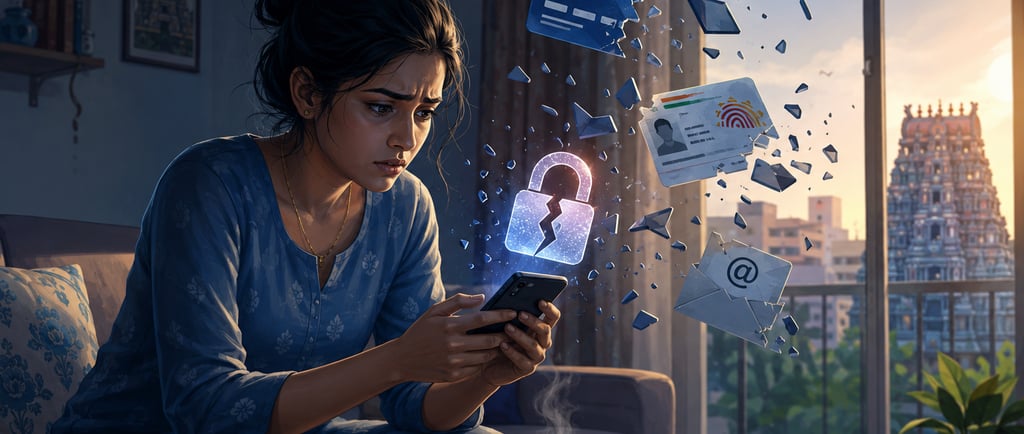
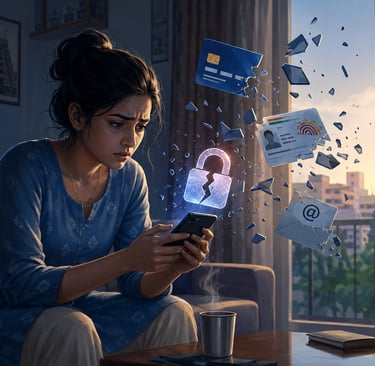
Priya did not lose her phone. She did not click a suspicious link. She did not do anything wrong. Yet one Tuesday morning, her bank called to say someone in Rajasthan had tried to withdraw ₹47,000 from her account. She had never been to Rajasthan. Someone else had. With her data.
DIGITAL SAFETY
ZxtarAI
5/5/20264 min read
7 signs your data has already been stolen
Priya did not lose her phone. She did not click a suspicious link. She did not do anything wrong. Yet one Tuesday morning, her bank called to say someone in Rajasthan had tried to withdraw ₹47,000 from her account. She had never been to Rajasthan. Someone else had. With her data.
The Tuesday that changed everything for Priya
Priya is 28. She works at an HR firm in Chennai. She is careful with money, careful with her phone, and careful with who she shares her details with.
Or so she thought.
That Tuesday morning, the bank's fraud prevention team told her that her mobile number, email, and partial account details had appeared on a list being traded on the dark web. They had come from a data breach at an online shopping app she had used twice - eighteen months ago - and then forgotten entirely.
Priya had done everything right. The app had done everything wrong. And her data had been quietly sitting in the wrong hands for over a year before anyone noticed.
Here is the part that should make you pause.
She had no idea. Not a single sign. Or so she thought - until she looked back.
The signs were always there. We just don't know what to look for.
A data breach does not announce itself. There is no alarm, no notification, no letter in the post. Most people find out months later - sometimes years - when the damage is already done.
But there are signs. Quiet ones. The kind you dismiss as "phone acting strange" or "must be spam." Here are seven of them.
You start getting calls for loans you never applied for: Random loan agents calling you by name, knowing your city, sometimes even your approximate income. You did not apply. But someone sold a list — and your number was on it.
OTPs arrive on your phone that you did not request: Someone is trying to log into an account using your number. They may not have succeeded yet. But they are trying. This is not a glitch. This is a person.
Your email inbox is suddenly full of "welcome" emails from apps you never signed up for: Someone created accounts using your email address. Either testing if it works or covering their tracks by flooding your inbox so you miss the important alerts among the noise.
You get a "password changed successfully" email - but you changed nothing: Stop. Do not close that email. Someone just locked you out of your own account. Act within the next ten minutes or that account is gone.
Friends say they got a strange message or link "from you": Your WhatsApp or email has been used to send messages you never sent. Your account is compromised and is now being used to attack people you know. This spreads fast.
Your bank shows a small transaction you don't recognize - often just ₹1 or ₹2: Fraudsters test stolen card details with tiny amounts first. If the ₹2 goes through, the ₹47,000 comes next. A small unknown debit is never just a small unknown debit.
Your phone starts receiving ads that are uncomfortably accurate - about things you only said out loud: This one is harder to prove. But if it happens repeatedly, it is worth checking which apps have microphone access on your phone. Some of them should not.
Why most people notice too late
Because we are busy. Because one random OTP feels like a telecom glitch. Because a ₹2 debit barely registers in a month of transactions.
Fraudsters count on exactly this. They move slowly, quietly, testing a little at a time - until they are confident enough to move fast.
Priya remembered, after the bank called, that she had received two mysterious OTPs about six weeks earlier. She had dismissed them as "some spam thing."
They were not spam. They were the rehearsal.
So, what can you do right now?
Your 2-minute check today
Go to haveibeenpwned.com - type your email address. This free tool tells you if your email has appeared in any known data breach worldwide. It takes 10 seconds.
If your email appears - do not panic. Change the password for that account immediately. Then check if you use the same password anywhere else. Change those too.
Go to your bank app right now and turn on transaction alerts for every amount - including ₹1. Most banks have this under Settings → Notifications. Free. Takes 60 seconds. Catches fraud before it grows.
You cannot always stop a breach from happening - that is often the company's failure, not yours. But you can catch it early. And early is everything.
Priya got her money back - because the bank caught it in time. Not everyone is that lucky.
Most of us are exactly like Priya. Careful, Sensible, and still exposed without knowing it.
There is no shame in that. The digital world is designed this way- convenient enough that we don't ask questions, smooth enough that we don't pause to think.
But today, you paused. You read. You thought about it. That is enough for a beginning.
#DataPrivacy#DigitalSafety#CyberSecurity#OnlineSafety#PrivacyMatters#CyberSecurityIndia#DigitalIndia#IndiaDigital#DataPrivacyIndia#MakeIndiaSafe#DataBreach#CyberFraud#IdentityTheft#DigitalRights#PersonalData
Disclaimer: This article is part of an educational series on data privacy, digital safety, and AI governance. The scenarios described are illustrative and intended to help readers understand real-world privacy issues. They do not constitute legal, financial, or professional advice.
© ZxtarAI - Understanding the Digital World, One Story at a Time