
GDPR - The law written for you That nobody ever told you about
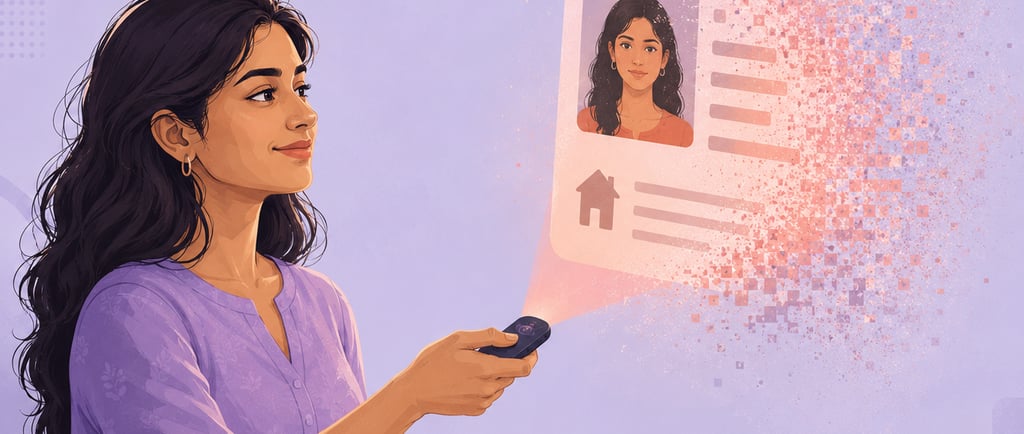
Meera got an email from a European company saying her data had been breached. She had shopped on their website once, two years ago. The email told her exactly what was taken, why it happened, and what she could do about it. She was shocked - not by the breach, but by the fact that a company was actually telling her the truth. That email existed because of one law. GDPR.
PRIVACY LAW
ZxtarAI
5/8/20264 min read
GDPR - The law written for you
That nobody ever told you about
Meera got an email from a European company saying her data had been breached. She had shopped on their website once, two years ago. The email told her exactly what was taken, why it happened, and what she could do about it. She was shocked - not by the breach, but by the fact that a company was actually telling her the truth. That email existed because of one law. GDPR.
The email that surprised Meera - and what it means for you
Meera is 34. She lives in Bengaluru and works in marketing. Two years ago, she had bought a book from a European online store — one of those late-night impulse purchases that you half-forget by morning.
She forgot the website entirely.
Then, on a random Wednesday, an email landed in her inbox. The company told her their database had been breached. They told her which data was exposed - her name, email, and delivery address. They told her when it happened. They told her what they were doing to fix it. They gave her a contact to write to with questions.
Meera sat with the email for a long time.
She had never received anything like this from an Indian company. Most Indian companies, when breached, say nothing. Or they say it quietly, weeks later, buried in a policy update nobody reads.
This European company had no choice. The law forced them to tell her within 72 hours.
That law is called GDPR.
So, what exactly is GDPR? Why should you care?
GDPR stands for General Data Protection Regulation. It is a law passed by the European Union in 2018 that tells companies - very firmly - how they must treat your personal data.
Now you may be thinking: I live in India. What do European laws have to do with me?
More than you think.
GDPR applies to any company that collects data from people in the EU - regardless of where the company is based. But more importantly, GDPR has become the global benchmark. India's own DPDP Act, which we will cover tomorrow, is heavily inspired by it. Understanding GDPR means understanding the direction the entire world - including India - is moving in.
Think of GDPR as the world's first serious rulebook for data. Before it existed, companies could do almost anything with your data and face very little consequence. After GDPR, a company that mishandles your data can be fined up to 4% of its entire global revenue.
For a company like Meta, that is billions of dollars. They started paying attention.
The rights GDPR gives you - in plain language
This is the part most people never hear about. GDPR is not just a corporate compliance document. It is a list of rights. Your rights. Here are the ones that matter most in everyday life.
The Right to Know: Any company collecting your data must tell you what they are collecting, why, and how long they will keep it. In plain language. Not hidden in 30 pages of legal text.
"That app must tell you upfront: we collect your location to show nearby restaurants. Not just 'to improve your experience.'"
The Right to Access: You can ask any company: what data do you have about me? They must show you. All of it. Within 30 days. For free.
"Meera emailed that European bookstore after the breach. They sent her a complete file of everything they held about her - purchases, browsing, device data."
The Right to be Forgotten: You can ask a company to delete all your data. If they have no legal reason to keep it, they must comply. Your past does not have to follow you forever online.
"That embarrassing profile you made on a website in 2015? You can ask them to delete every trace of it."
The Right to Object: If a company is using your data for advertising or profiling, you can say no. They must stop. No argument, no fee, no lengthy process.
Tired of being tracked across websites for ads? Under GDPR, you can formally object - and they must stop using your data for targeting."
The Right to Breach Notification: If your data is breached, the company must inform you within 72 hours. Not six months later. Not never. 72 hours.
"This is why Meera got that honest email. Not because the company was kind - because the law gave them no other choice."
But does this protect Indians today?
Partially. If you use a European company's website or app - yes, GDPR protects you. Companies like Google, Meta, Amazon, Spotify, Booking.com - all subject to GDPR - handle data from Indian users too.
But for purely Indian companies, GDPR has no direct teeth. That gap is exactly why India passed its own DPDP Act. Which, as promised, we will cover in full tomorrow.
For now, understand this: the standard exists. The world has agreed that your data deserves protection, transparency, and respect. The question is only how quickly every country - and every company - catches up.
One thing you can do right now
Your 2-minute action today:
Think of one European company whose app or website you use - Spotify, Booking.com, a European airline, a news site.
Go to their website and search for "Privacy" or "Data Request." Most GDPR-compliant companies have a dedicated page where you can request your data or ask for deletion.
Submit a Subject Access Request - simply ask: "What personal data do you hold about me?" They must respond within 30 days. You will likely be surprised by how much they know.
Meera's story did not end badly. She changed her password, monitored her accounts, and wrote to the company asking them to delete her data. They did - within two weeks.
She told me later: "I felt, for the first time, like I had some control. Like I wasn't just a number in someone's database."
That feeling is what every one of your rights is designed to give you.
You are not a data point. You are a person. And the law - in more and more parts of the world - is finally starting to agree.
#DataPrivacy#DigitalSafety#KnowYourRights#PrivacyMatters#DigitalLiteracy#DPDPAct#DataPrivacyIndia#DigitalIndia#IndiaDigital#CyberSecurityIndia#GDPR#PrivacyLaw#DigitalRights#DataProtection#RightToPrivacy
Disclaimer: This article is part of an educational series on data privacy, digital safety, and AI governance. The scenarios described are illustrative and intended to help readers understand real-world privacy issues. They do not constitute legal, financial, or professional advice.
© ZxtarAI - Understanding the Digital World, One Story at a Time