
The Hidden Cost of Convenience: What you really pay when an app is "free"
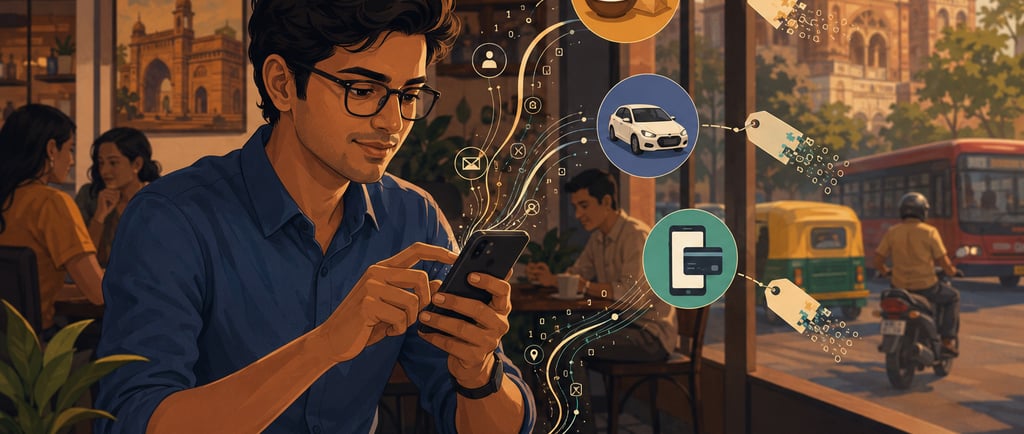
The cab arrived in three minutes. The food was delivered in twenty. The payment took less than ten seconds. As Rohan sat back and admired how effortless life had become, a question never crossed his mind: if all these services are free or heavily discounted, who is actually paying the bill?
DIGITAL SAFETY
ZxtarAI
5/22/20263 min read
The Hidden Cost of Convenience: What you really pay when an app is "free"
Introduction
The cab arrived in three minutes. The food was delivered in twenty. The payment took less than ten seconds. As Rohan sat back and admired how effortless life had become, a question never crossed his mind: if all these services are free or heavily discounted, who is actually paying the bill?
The day convenience started feeling expensive
Rohan Mehta, a 34-year-old marketing manager in Pune, wasn't thinking about privacy on a Thursday evening. He was thinking about dinner.
After a long day at work, he ordered food through an app, booked a cab to meet friends, paid through UPI, and later streamed a movie before going to bed. None of those actions felt unusual. In fact, they felt normal-almost invisible. That's the thing about convenience. Once it becomes part of everyday life, we stop noticing it.
A few days later, while discussing home internet plans with a colleague, Rohan mentioned that he had been researching broadband providers online. His colleague laughed.
"Give it a day," he said. "You'll start getting calls.". He was right.
Within forty-eight hours, promotional messages and calls began arriving from companies Rohan had never contacted directly.
It wasn't alarming. But it was revealing!!!
Convenience is a trade, We just don't see the receipt.
Most of us understand how traditional transactions work. We buy something, we pay for it. The exchange is visible. Digital services work differently.
Navigation apps help us avoid traffic. Social media connects us with friends. Shopping apps compare prices in seconds. Food delivery platforms save us time. Many of these services feel free, or close to free.
Yet running them costs enormous amounts of money. Servers, engineers, customer support teams, infrastructure-none of it comes cheap.
So where does the revenue come from? The answer often lies in data.
Not necessarily your bank account details or personal documents. More often, it's information about your behaviour-what you search for, what you click on, how often you travel, what you buy, and what you might be interested in next.
The service feels free because the transaction isn't happening in cash. It's happening in information.
You wanted convenience. They wanted insights.
As Rohan started paying attention, he noticed how many digital services were quietly learning from him.
His food delivery app knew his preferred restaurants and dinner timings. His navigation app knew where he worked and how he travelled. His shopping apps knew what he bought and what he almost bought. Streaming platforms knew what kept him awake on weekends.
None of this felt invasive on its own. After all, the apps were doing exactly what they promised - making life easier.
But convenience and data collection often grow together.
The more a service understands you, the more personalized it becomes. Recommendations improve. Search results become more relevant. Offers feel timely.
That's the benefit. The trade-off is that companies learn more about you with every interaction.
The most expensive things are often invisible
Imagine someone offered you free coffee every morning. You'd probably ask why.
If they continued offering it for months, you'd definitely ask why. But when digital services offer extraordinary convenience, we rarely ask the same question.
That's because the exchange is harder to see. No one sends a monthly invoice saying:
"Thank you for sharing your browsing habits, location history, and shopping preferences."
The transaction happens quietly. And that doesn't automatically make it bad.
Many services genuinely use data to improve customer experience. The issue isn't that data is collected. The issue is whether users understand what is being collected, how it is used, and what they are receiving in return.
Awareness changes the conversation. Without awareness, convenience can feel free. With awareness, it becomes a conscious choice.
The question Rohan asks differently now
A week later, Rohan was still using the same apps. He still ordered food online. He still booked cabs. He still paid digitally.
Nothing dramatic changed.
But one question entered his thinking. Whenever he encountered a "free" service, he stopped asking only what it could do for him.
He also asked what it needed from him. That small shift changed how he viewed the digital world.
Because every transaction has a cost. Sometimes it's measured in rupees. Sometimes it's measured in information.
The important thing is knowing the difference.
So, what can you actually do?
Today, open one app you use every day. Visit its privacy policy-not to read all twenty pages. Just spend two minutes looking for one section:
"What information do we collect?"
You may be surprised by how much more valuable your data is than you realized.
Remember
The smartest digital users aren't the ones who avoid technology. They're the ones who understand the trade they're making.
#DataPrivacy #DigitalSafety #CyberSecurity #PrivacyMatters #KnowYourRights #DigitalLiteracy #OnlineSafety #DataProtection #DPDPAct #DigitalIndia #IndiaDigital #DataPrivacyIndia #IndianInternet #TechIndia #PersonalData #DataEconomy #DigitalRights #PrivacyLaw #CyberSecurityIndia #MakeIndiaSafe
Disclaimer: This article is part of an educational series on data privacy, digital safety, and AI governance. The scenarios described are illustrative and intended to help readers understand real-world privacy issues. They do not constitute legal, financial, or professional advice.
© ZxtarAI - Understanding the Digital World, One Story at a Time